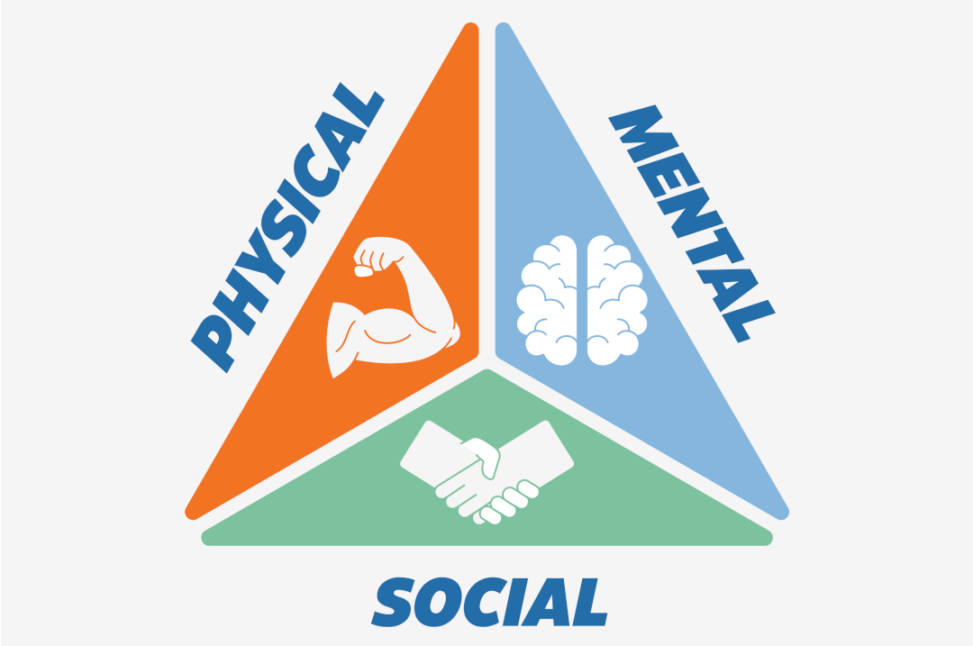
Health is a state of complete physical, mental and social well-being and not merely the absence of disease or infirmity.
This definition is part of the WHO‘s constitution. It is also reflected in the so-called ‘health triangle’ tool that I use in my journal to assess my well-being. The results are visualised on the graph which I include in my journal each month.
How does it work?
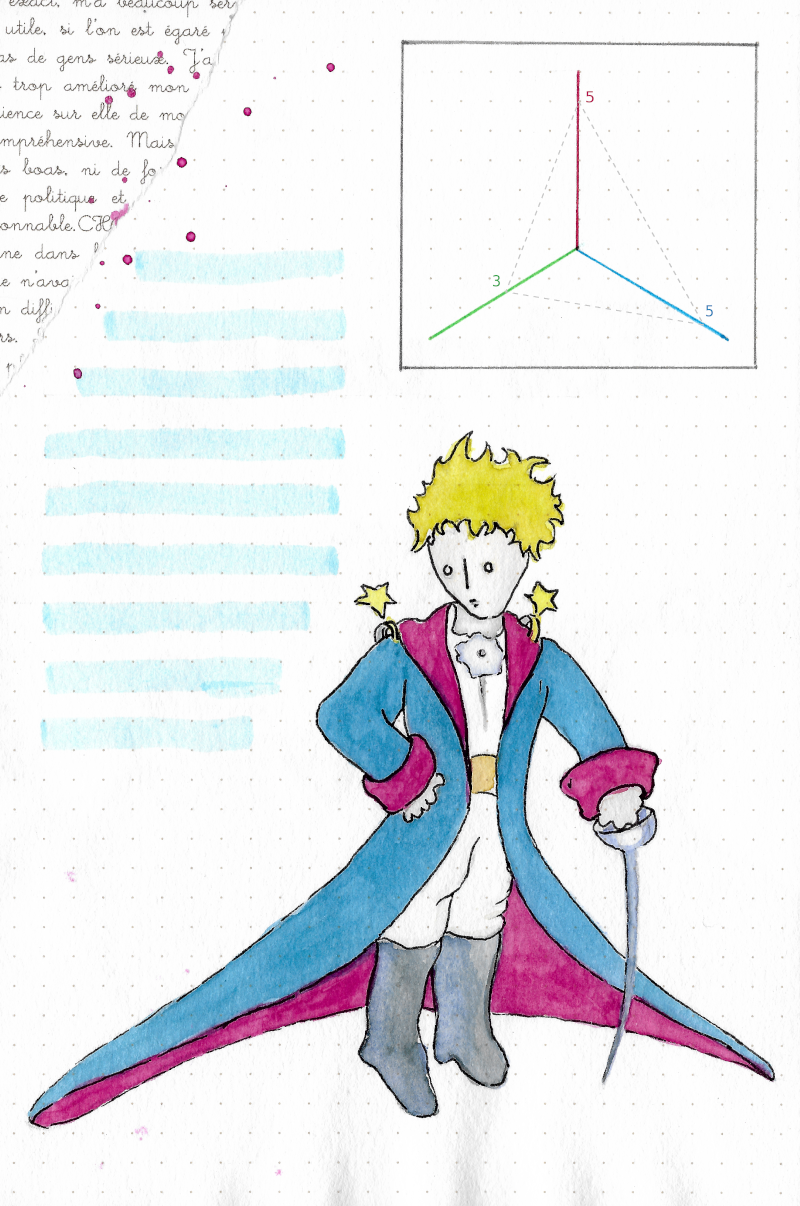
The goal of filling out the health graph is to achieve an equilateral triangle, which means that all sides are the same length, and each angle is equal to 60 degrees. Each corner of the triangle represents one of the three aspects of health, which I will explain further below. Each aspect of health is of equal importance, which is signified by all sides being equal.
My version of the graph has been slightly adapted to fit the grid in my bullet journal and doesn’t follow these precise measurements, but it works the same.
The three sides of the health triangle all interact with each other. For example, mental stress can cause various health problems such as high blood pressure while social contact might relieve stress. Likewise, improper eating habits can cause low blood sugar, which can lead to irritability. Not only does this affect mental health; it can cause you to become socially isolated.
Who came up with it?
According to numerous sources on the internet the term ‘health triangle’ was conceptualized by the Tanana Middle School‘s 1997 eighth-grade students. I have contacted the school’s principal and asked her to confirm this. As of the time of publication I am waiting for a response to my email. I will update this post if and when I receive a reply.
According to these internet claims the students were allegedly given a task of writing essays on health problems for eight graders in their district. One hour of school time each day was devoted to research and the project was completed within 10 days. Eventually, the students narrowed their subject matter down to three aspects of health: physical health, mental health and social health.
The lists below are how I personally define what it means to me to live a healthy life in each of these areas. I’ve used these definitions ever since I first started journaling.
Physical Health
Physical health involves anything related to your body, including exercise, what you eat, your drug and alcohol use, your weight, and your water intake. Sleep patterns and personal hygiene also influence your physical well-being.
- I get seven to nine hours of sleep and 30 minutes of rest each day
- I eat a well balanced diet, including a healthy breakfast and enough fluids
- I respect my body by keeping it clean and well cared for
- I prioritise getting some physical exercise each day
- I am aware of, listen to, and trust my body
- I address physical symptoms with a professional and take their advice seriously
Mental Health
Mental health concerns your emotional well-being; your inner thoughts, feelings, behaviors, and emotions and how you talk to yourself. Being mentally well means being able to handle life’s difficulties and overcome feelings of stress and anxiety.
- I generally feel good about myself and accept who I am
- I am aware of my thoughts, feelings and behaviour
- I make decisions based on a balance of emotions, rational thought, and purpose
- I accept constructive criticism and reflect on it honestly
- I learn and think about new things and develop new skills
- I address mental health issues with a professional and take the advice seriously
Social Health
Social health deals with the way you relate to the people in your environment. These include family members, friends, coworkers, neighbors, peers, and the public. It revolves around connection, a sense of community and belonging, and feeling supported, valued, and loved.
- I have at least one close friend and keep in contact regularly
- I feel valued, respected and cared for by people that matter to me
- I honour my beliefs, and respectfully take a stand for them
- I am a good listener, and don’t interrupt others
- I feel understood, and get support from others when needed
- I set boundaries, and say no when I’m asked to cross them
So what does this mean?
While physical health is important, being physically well depends on being mentally well, and being mentally well depends on being socially well. The three sides of the health triangle are equally important, and you need to balance each aspect to live a healthy life.
I use these principles to set my monthly self-improvement goals. I count how many items in each lists are satisfied, mark the total amount on the graph and whichever area scores the lowest determines my goal of the month.
I hope that by sharing this I can give some insight into how I use the health page and the graph in my journal. I look forward to reading any questions or remarks you might have in the comments below. If you learned anything or found this useful in some way, let me know!
Leave a Reply